As a seasoned supplier in the field of AC voltage transformers, I’ve witnessed firsthand the detrimental effects of high losses on efficiency, cost, and overall system performance. These losses not only lead to increased operational expenses but also pose risks to equipment longevity and environmental sustainability. In this blog, I’ll share my insights and practical strategies on how to reduce losses in an AC voltage transformer, drawing on my extensive experience and in – depth knowledge of the industry. AC Voltage Transformer

Understanding the Types of Losses in AC Voltage Transformers
Before delving into loss – reduction strategies, it’s crucial to understand the two primary types of losses in AC voltage transformers: core losses and copper losses.
Core Losses
Core losses, also known as iron losses, occur in the transformer’s magnetic core. They are composed of two components: hysteresis loss and eddy current loss.
Hysteresis loss results from the repeated magnetization and demagnetization of the core material. As the magnetic field in the core changes direction with the alternating current, the magnetic domains within the core material realign, causing energy to be dissipated as heat. The amount of hysteresis loss depends on factors such as the core material’s magnetic properties, the frequency of the AC supply, and the maximum magnetic flux density.
Eddy current loss, on the other hand, is caused by the induction of circulating currents, known as eddy currents, in the core material. These currents flow in closed loops within the core and dissipate energy in the form of heat. Eddy current loss can be reduced by using laminated cores, which consist of thin sheets of magnetic material insulated from each other. This reduces the cross – sectional area available for the eddy currents to flow, thereby minimizing their magnitude.
Copper Losses
Copper losses occur in the transformer’s windings, where electrical energy is dissipated as heat due to the resistance of the copper conductors. The power dissipated in the windings is given by the formula (P = I^{2}R), where (I) is the current flowing through the winding and (R) is the resistance of the winding. Copper losses increase with the square of the current, so they are particularly significant under high – load conditions.
Strategies for Reducing Core Losses
Selecting High – Quality Core Materials
One of the most effective ways to reduce core losses is to use high – quality core materials with low hysteresis and eddy current losses. Materials such as grain – oriented electrical steel are commonly used in transformer cores due to their excellent magnetic properties. These materials have a high permeability, which means they can easily be magnetized and demagnetized, resulting in lower hysteresis losses. Additionally, they have low electrical conductivity, which helps to reduce eddy current losses.
Optimizing Core Design
The design of the transformer core also plays a crucial role in minimizing losses. For example, using a core with a larger cross – sectional area can reduce the magnetic flux density, which in turn reduces hysteresis losses. Additionally, the shape of the core can affect the distribution of magnetic flux and eddy currents. By using a well – designed core shape, such as a stepped core, the magnetic flux can be more evenly distributed, reducing eddy current losses.
Controlling the Operating Frequency
The operating frequency of the transformer also affects core losses. Hysteresis losses are directly proportional to the frequency of the AC supply, while eddy current losses are proportional to the square of the frequency. Therefore, reducing the operating frequency can significantly reduce core losses. However, this may not always be practical, as the frequency of the power grid is typically fixed. In some applications, such as in adjustable – speed drives, the frequency can be controlled to optimize transformer performance.
Strategies for Reducing Copper Losses
Using Larger Conductor Sizes
One of the simplest ways to reduce copper losses is to use larger conductor sizes in the transformer windings. As the resistance of a conductor is inversely proportional to its cross – sectional area, increasing the conductor size reduces the resistance of the winding, thereby reducing copper losses. However, using larger conductors also increases the cost and size of the transformer, so a balance must be struck between cost, size, and performance.
Optimizing Winding Design
The design of the transformer windings can also have a significant impact on copper losses. For example, using multiple parallel strands of smaller conductors instead of a single large conductor can reduce the resistance of the winding due to the skin effect. The skin effect causes the current to flow more on the outer surface of the conductor at high frequencies, increasing the effective resistance. By using multiple parallel strands, the surface area available for current flow is increased, reducing the resistance.
Monitoring and Controlling Load
Copper losses are directly proportional to the square of the current flowing through the windings. Therefore, monitoring and controlling the load on the transformer can help to reduce copper losses. By avoiding overloading the transformer, the current flowing through the windings can be kept within a safe and efficient range. Additionally, using load – management techniques, such as peak – shaving and load – shifting, can help to reduce the average load on the transformer, further reducing copper losses.
Other Considerations for Loss Reduction
Temperature Management
Temperature has a significant impact on both core and copper losses in a transformer. As the temperature of the core and windings increases, the resistance of the conductors increases, leading to higher copper losses. Additionally, high temperatures can also affect the magnetic properties of the core material, increasing hysteresis losses. Therefore, effective temperature management is crucial for reducing losses in a transformer.
This can be achieved through proper ventilation, cooling systems, and monitoring of the transformer’s temperature. For example, using forced – air cooling or oil – cooling systems can help to dissipate heat more effectively, keeping the temperature of the transformer within a safe and efficient range.
Regular Maintenance and Testing
Regular maintenance and testing of the transformer are essential for ensuring its optimal performance and reducing losses. This includes inspecting the core and windings for signs of damage or deterioration, checking the insulation resistance, and measuring the losses. By detecting and addressing any issues early, the transformer can operate more efficiently, reducing losses and extending its lifespan.
Conclusion
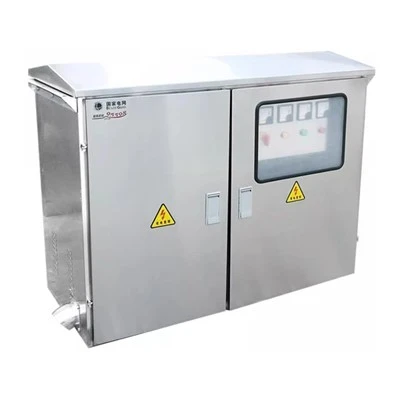
Reducing losses in an AC voltage transformer is a complex but achievable goal. By understanding the different types of losses and implementing the strategies outlined above, such as selecting high – quality core materials, optimizing winding design, and managing the load and temperature, significant improvements in efficiency can be achieved.
AC Voltage Transformer As a trusted supplier of AC voltage transformers, we are committed to providing our customers with high – performance products that minimize losses and maximize efficiency. Our team of experts can work with you to select the right transformer for your specific application and provide advice on how to optimize its performance. If you are interested in reducing the losses in your AC voltage transformers and improving the efficiency of your electrical systems, I encourage you to contact us to discuss your requirements. We look forward to helping you achieve your goals and enhance the performance of your electrical infrastructure.
References
- "Transformer Engineering: Design, Technology, and Diagnostics" by John G.流涕(注:原文此处有误推测为应该有具体人名)
- "Electric Machinery Fundamentals" by Stephen J. Chapman
- Industry – standard technical papers on transformer design and operation from IEEE Transactions on Power Delivery.
Jiangshan Da’an Electric Power Equipment Co., Ltd.
As one of the most professional ac voltage transformer manufacturers and suppliers in China, we have world-leading production equipment and strong manufacturing capabilities. Please feel free to buy high quality ac voltage transformer made in China here from our factory.
Address: No. 7 Longfei Road, Shuangta Sub-district, Jiangshan City, Zhejiang Province, P.R. China
E-mail: 1614665601@qq.com
WebSite: https://www.daan-electrical.com/
