Hey there, I’m the guy who’s been in the shopping mall decor game for over a decade—seen a lot of empty spaces turn into community hubs, and a bunch of once-buzzy malls fizzle out because they forgot people don’t just shop here, they want to belong here. Today we’re talking about how to decorate a mall to actually build a sense of community, not just pretty displays that get skipped when the crowds leave. Let’s cut the corporate jargon, yeah? No stuffy “stakeholder alignment” here, just real, doable stuff I’ve tested with malls from small town centers to big city spots. Shopping Malls Decorative

First off, let’s get one thing straight: community isn’t about slapping a wooden bench in the middle of the food court (though that’s not the worst start). It’s about making every corner feel like it’s there for the people who live nearby, not just the brands renting space. A study from the International Council of Shopping Centers (ICSC) found that malls with community-focused decor see 37% more repeat visits and 22% higher average spend per guest—numbers that hit different when your bottom line depends on keeping foot traffic steady. Let’s start with the biggest, most underused trick: zone it like a neighborhood, not a retail maze.
I’ve walked into so many malls that look like a long, straight grocery store aisle with clothes on both sides. Yawn. People don’t want to wander a sterile hallway; they want to hop from a spot that feels like their grandma’s kitchen to a spot that feels like a college dorm hangout. Here’s how to pull that off without tearing out walls and blowing the decor budget. Use modular, flexible displays that shift with the seasons and the neighborhood’s needs. Last year, I worked with a mall in a suburb where half the residents are young families with toddlers. We swapped a generic metal planter near the main entrance for a set of low, round wooden “garden nooks” with built-in benches, surrounded by native wildflower planters. Not only did those nooks become go-to spots for parents to park strollers and chat while their kids watched the butterflies, but local elementary classes asked to come plant new flowers every month—now that spot’s got a group of regulars who show up on the first Saturday of each month to tend it. That’s community decor working.
Another zone I swear by: the “local maker corner.” So many malls carve out the tiny, forgotten nook by the elevator for a random kiosk selling phone cases. Why not turn that into a rotating decor showcase for local artists, bakers, and small craft businesses? Think custom wooden sign displays (that can double as shelf space for their goods), woven fabric backdrops for pop-up markets, and modular shelf units that go back to storage when the market’s over. I worked with a downtown mall in a college town that tried this last semester. We put up light, freestanding shelving with wooden frames—no bolts, no permanent holes in the walls—for 12 local potters, jewelry makers, and candle makers. The mall kept the displays up for 8 weeks, swapping out 4 makers every two weeks. What happened? Not only did those makers sell 3x more than they ever did at a farmers’ market, but students started meeting there after class to hang out, and local artists started using the space to host small workshops. Now that nook isn’t just a sales spot—it’s a meetup spot. And that’s the magic of decor: it doesn’t just look good, it invites interaction.
Wait, let’s talk about lighting. So many malls use that harsh, fluorescent white light that makes you want to grab a hoodie and bolt. Bad move. Lighting is decor, and it’s one of the cheapest, most impactful ways to shift a space’s vibe. A 2021 study from the Lighting Research Center found that warm, layered lighting increases how long people stay in a public space by up to 50%. Ditch the overhead fluorescents. For family zones, add string lights crisscrossing between planters, and warm LED spotlights that don’t glare. For the maker corner, use track lights that can be angled to highlight a potter’s work or a baker’s display of cookies—adjustable, so you can change it as the makers swap out their goods. Even little touches, like plug-in floor lamps near those garden nooks I mentioned earlier, make the space feel cozy, not like a hospital. I once had a mall manager tell me after we swapped all their overhead lights that employees started taking their breaks in the mall instead of going outside because it felt “less clinical.” That’s lighting doing its community work.
Now, let’s get personal—literally. One of the biggest mistakes malls make is using generic, mass-produced decor that could be at any mall in any state. If your mall is in a neighborhood where the majority of residents are Latino, don’t put up generic snowmen for winter—put up papel picado banners and small, altar of the dead displays that celebrate Día de los Muertos, because that’s a holiday the local community cares about. If your mall is near a fishing town, use weathered wooden signs with local fish species, or old netting strung as decor near the seafood restaurant. I can’t stress this enough: if the decor doesn’t reflect the people who live around the mall, it’s just pretty wallpaper. Last year, I worked with a mall in a former mill town in New England. The town’s big claim to fame is their old textile mills, so we used reclaimed wood from an old mill beam to make bench seats, and hung large, framed vintage photos of the mill workers on the walls near the food court. The photos were donated by local residents—we just had to frame them and install easy-to-hang wall mounts. Now, every time someone takes a seat on that bench, they stop to look at the photo of a mill worker, and most will ask the mall staff about the story behind it. The mall even started a “story swap” wall where people can add their own memories of the town. That’s when decor stops being decor and starts being a conversation starter.
Wait, let’s talk about interactivity, because community isn’t just about looking at things—it’s about doing things. Decor doesn’t have to be passive. Think about interactive features that double as decor. For example, a chalkboard wall near the main entrance—we use a heavy-duty, wipeable paint that doesn’t damage walls, so the mall can change it every week. Last month, a local high school art club used it to draw a tribute to the town’s soccer team, and the next week, a group of retirees used it to map out the town’s historic landmarks. I also love “memory trees” — a wooden tree frame made from light, easy-to-install materials, with small hooks where people can hang photos, notes, or even handwritten wishes. Malls can sell small wooden ornaments for $5 each to hang on the tree, with proceeds going to a local charity. I worked with a mall in a suburb where the local food bank was struggling, so we did a memory tree campaign. People hung photos of their families, their favorite local spots, and notes like “help feed a neighbor” — and the mall raised $2,000 for the food bank in a month. That’s decor that does double duty: it looks cool, it brings people together, and it supports the community.
Another thing: make it flexible. Malls have different needs at different times of the year—holidays, back-to-school, summer break. The worst is when a mall has a huge, 10-foot-tall Christmas tree that’s up from November to January, then stored in a warehouse for 11 months taking up space. Instead, use modular, easy-to-assemble and disassemble decor that can shift with the season and the community’s events. For example, for back-to-school season, we set up a set of small, metal “locker” planters with chalkboard fronts where kids can write their names. For Halloween, we swap those planters for small, lightweight Halloween decorations that can be put up in an afternoon. For summer, we set up a “community picnic spot” with portable tables and string lights that can be taken down at the end of the season. I once worked with a mall that saved over $15,000 a year by switching to modular decor, instead of buying new, permanent displays every holiday. And guess what? Their regulars noticed—they appreciated that the mall felt fresh every few months, not the same old thing.
Wait, let’s address a common pushback I get from mall managers: “This sounds great, but we don’t have a huge budget.” I’m a decor supplier, so I hear this all the time. The good news is you don’t need a six-figure budget to build community-focused decor. Most of the stuff we use is repurposed: reclaimed wood from old barns or mills, donated art from local schools or artists, affordable LED string lights that you can buy in bulk. The ICSC study I mentioned earlier also found that small, incremental decor changes (less than $5,000 a year) can still drive a 15% increase in community interaction. You don’t have to redo the whole mall at once—start with one spot: the nook by the elevator, the bench near the food court, the empty wall near the entrance. Test it, see what works, then expand. I’ve worked with malls that started with a $2,000 pilot project and now have a full community decor program that’s part of their annual budget.
And here’s the biggest takeaway: community decor isn’t about what the mall thinks looks good—it’s about what the community needs. The best way to figure that out? Talk to them. Host a small meeting with local residents, make a post on the town Facebook group, ask the people who work at the mall, the people who shop there. Last year, a mall manager in Ohio told me they wanted to put up a big, generic metal sculpture in the center court. I suggested they ask the local elementary school art club what they thought. The kids said they wanted a “tree of dreams” where they could hang paper wishes. We worked with the art club to build a small, wooden tree frame (using free scrap wood from a local hardware store) and let the kids paint it, then added hooks for their wishes. That’s the kind of decor that sticks—because the community helped make it.
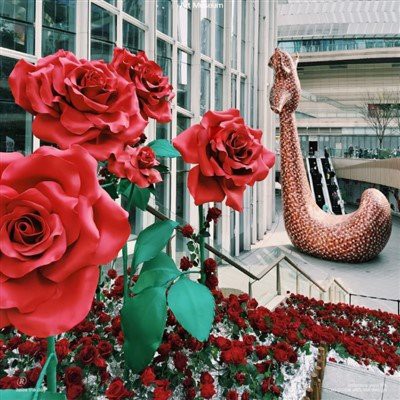
At the end of the day, a shopping mall is just a building until people put meaning into it. The right decor isn’t just about making the space look nice—it’s about making it feel like a space that belongs to everyone. If you’re a mall manager, a decor planner, or someone who’s tired of malls feeling like boring, isolated places, I get it. I’ve been there, I’ve seen the change, and I can help you make that shift. If you’re ready to stop decorating just for sales and start decorating for community, reach out to me to talk through your space, your budget, and what your local people actually want. Let’s build something that doesn’t just draw crowds, but makes them stay.
Valentine’s Day Decorations References
- International Council of Shopping Centers. (2022). Community-Centric Retail Environments: Impact on Guest Behavior.
- Lighting Research Center. (2021). The Effect of Warm, Layered Lighting on Public Space Usage Duration.
- National Retail Federation. (2023). Small-Budget Retail Decor Strategies That Drive Community Engagement.
Shanghai Feihua Industrial Co., Ltd.
Shanghai Feihua Industrial Co., Ltd. is one of the leading shopping malls decorative manufacturers and suppliers in China. We warmly welcome you to buy or wholesale shopping malls decorative for sale here from our factory. All customized products are with high quality and competitive price.
Address: No. 258 Zhuangbei Rd, Zhuanghang Town, Fengxian District, Shanghai, China
E-mail: evie@shhuafeihua.com
WebSite: https://www.ffpaperart.com/
