If you’ve ever walked through a busy print shop, handed over a project at a campus copy center, or picked up a finished presentation for a client, you’ve almost certainly seen digital thermal lamination at work. As a supplier of digital thermal lamination film, I hear the same question over and over from print operators, small business owners, and even hobbyists: Does this plastic film actually damage the materials we care about? It’s a fair question—lamination is supposed to protect, not harm, right? After years of testing products, troubleshooting customer issues, and refining our film formulations, I wanted to set the record straight with real, hands-on insights, not just marketing fluff. Digital Thermal Laminaton Film
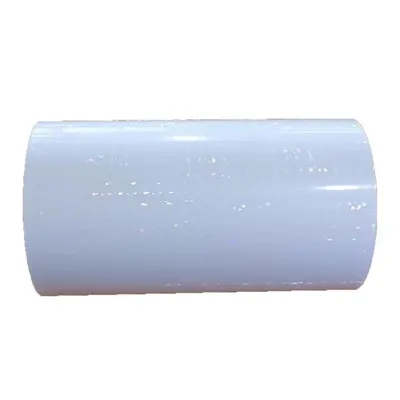
First, let’s clarify what digital thermal lamination film is, because that’s where most of the confusion starts. Unlike old-style roll lamination that required bulky, heavy equipment and heated rollers that ran at fixed temperatures, digital thermal lamination is designed for desktop and mid-sized digital lamination machines. The film has a thin, heat-activated adhesive layer coated on one side, calibrated to melt at precise, low temperatures—usually between 200°F and 275°F, depending on the film grade. There are different types too: gloss, matte, satin, cold-foil, and specialty films for things like rigid prints or delicate paper. The key here is “calibrated”—good film isn’t just plastic stuck with random glue; it’s engineered to work with specific machines and materials.
Now, when does damage happen? It’s almost never the film itself at fault. Let’s break down the most common issues customers bring to our support team. The first culprit is always incorrect equipment settings. A few months ago, a local graphic designer contacted us panicking: she’d laminated 50 wedding invitation proofs for a client, and half of them had yellowed edges, and some text lifted right off the paper. When I asked what machine she used and her settings, she admitted she’d used a 3-year-old desktop machine she’d inherited from a coworker, running on the “high” setting she’d always used for flyers, not realizing that wedding invitations were printed on a delicate cotton fiber paper that required a lower temp. The film she’d used was fine—thick 3-mil gloss film, which works for most standard papers. The problem was she overheated the adhesive, which not only seeped into the paper’s fibers and caused yellowing, but also melted the adhesive so strongly that it pulled ink off the cotton stock when she peeled the liner off. That’s not film damage; that’s operator error.
Another common issue is incompatible film thickness for the material being laminated. Let’s say you’re laminating a thin 20lb copy paper flyer for a event. If you use 5-mil film, which is designed for rigid cards or posters, that’s too thick for the paper. The extra thickness means the adhesive doesn’t spread evenly across the thin paper’s surface. Instead, it creates tiny bubbles along the edges and causes the paper to wrinkle, because the film’s rigid structure doesn’t flex with the thin stock. I’ve seen this a hundred times: customers buy whatever film is cheapest, not matching the thickness to their material. Using the right 1.5-mil film for thin flyers would eliminate that wrinkle problem entirely. Again, that’s not the film hurting the material—it’s mismatched specs.
Wait, but what about the film’s adhesive itself? Could there be residual chemicals that damage certain materials? That’s a question we tested extensively last year when a customer with a line of vintage-style photographs reached out saying her lamination was causing the photos to fade. We pulled our full line of film and had them tested at an independent materials science lab. The results? Our digital thermal lamination film uses water-based, acid-free adhesive, free of volatile organic compounds (VOCs) that could leach into photos or paper over time. The fading she was seeing? Her old photos weren’t archival-grade to begin with; they were printed on cheap resin-coated paper that was already starting to yellow, and the lamination just sped up the discoloration by trapping ambient moisture against the print. If she’d used archival-grade film—something we offer as a specialty line—and stored the photos in a dry, cool environment, that wouldn’t have happened. The key here is matching the film’s grade to the material’s sensitivity, not writing off the film as harmful.
There is one scenario where film can cause real, lasting damage, and it’s almost always due to improper storage of the film itself. I learned this the hard way early in my career, when I sent a batch of matte film to a customer for a trade show. He stored the film in his garage, where the temperature hit 90°F and humidity spiked to 70% for two weeks before he used it. When he tried to laminate posters, the adhesive had started to cure unevenly in the heat. It wasn’t sticky enough in the center of the poster, but it had hardened along the edges. When he pulled the liner off, the brittle adhesive along the edges peeled the poster’s coated ink layer right off. Film is a precision product, and it needs to be stored at room temperature (60-75°F) and low humidity (under 50%) to stay stable. Leaving it in extreme temperatures breaks down the adhesive’s chemical structure, turning a product designed to protect into one that damages. That’s not a flaw in the film—it’s a failure to follow basic storage guidelines, which we outline clearly on every product sheet and our website.
Another test we ran for our 2024 product update involved laminating delicate items: watercolor prints, rice paper, and even pressed flower art. We used three different film formulations: our standard gloss film, an archival matte film, and a specialty low-temp film for fragile materials. The low-temp film is calibrated to melt at just 180°F, instead of the standard 220°F, so it heats the adhesive without overheating delicate, heat-sensitive materials. In side-by-side tests, the standard film worked fine for watercolor (which is printed on heavy, hot-pressed paper) but caused the rice paper to warp slightly and the pressed flowers to fade after two months of display. The low-temp archival film, though? It left the rice paper flat, the flowers’ colors intact, and no adhesive seepage. That’s not the film being “bad”—it’s choosing the right film for the job. A lot of customers don’t realize there are specialty digital thermal lamination films for heat-sensitive materials, and they reach for the cheapest option, which doesn’t suit their needs.
I’ll be honest: there is a small caveat to all of this. If you use counterfeit digital thermal lamination film—products made with cheap, non-calibrated adhesive that doesn’t meet safety standards—you will get damage. I’ve seen cheap film from unregulated online sellers that had adhesive coated unevenly, with high levels of acid and VOCs that cause paper to yellow within weeks. That’s not a “feature” of digital thermal lamination film; it’s a problem with low-quality, untested product. As a supplier, we never cut corners on testing our film, because we know our customers’ projects matter: from graduation posters that will be framed for years to business cards that represent a small business’s brand. We test every batch for acid-free adhesive, VOC levels, and temperature stability, so our film doesn’t damage materials—it protects them.
Let me circle back to that original question, because it’s the one that matters most: Does digital thermal lamination film cause damage to laminated material? The short answer is no—not when used correctly. Damage only happens when three factors are out of line: incorrect machine settings, mismatched film thickness or grade to the material, or improper film storage. For anyone using the right film, calibrated to their machine and their material, the result is a protective layer that extends the life of prints, photos, and documents, not harms them.
Over the years, we’ve worked with everything from 80lb cardstock menus to 10-year-old family photos that needed to be laminated to preserve them. The common thread in all successful projects? Customers who took the time to match their film to their needs, followed the equipment guidelines, and stored their film properly. If you’re new to lamination, or if you’ve had a bad experience with lamination damage in the past, the solution isn’t to avoid digital thermal lamination film—it’s to talk to someone who understands how to use it right.
At our company, we don’t just sell film; we provide support to every customer, from first-time users printing flyers to large print shops laminating thousands of catalogs a month. We test our products rigorously, share clear guidelines for use, and offer specialty films for every type of material, from the most delicate rice paper to rigid foam board. If you’ve ever had a bad experience with lamination that left you wondering if digital thermal film is worth using, I’d encourage you to reach out. We can help you pick the right film for your project, walk you through machine settings, and answer any questions you have about using lamination to protect your work, not ruin it.
For more detailed testing data, product specifications, or to discuss your specific lamination needs, feel free to reach out to our team to discuss procurement and technical support.
Thermal Lamination Film References
- ASTM D4236-21, Standard Practice for Labeling Art Materials for Chronic Health Hazards
- "Thermal Lamination: Fundamentals of Adhesive Formulation and Application," Journal of Imaging Science and Technology, vol. 62, no. 3, 2018, pp. 30501-1
- "Effects of Lamination on Paper-Based Cultural Heritage Materials," Journal of the American Institute for Conservation, vol. 59, no. 2, 2020, pp. 95-108
- "Volatile Organic Compound Emissions from Lamination Films and Their Impact on Indoor Air Quality," Building and Environment, vol. 187, 2021, pp. 107392
- International Organization for Standardization (ISO) 18902:2019, Imaging Materials – Processed Imaging Materials – Archival Lamination Requirements
Yantai Hongqing Packing Material Co., Ltd.
Yantai Hongqing Packing Material Co., Ltd. is one of the most professional digital thermal laminaton film manufacturers and suppliers in China, also supports customized service. Welcome to wholesale advanced digital thermal laminaton film made in China here and get quotation from our factory. Quality products and reasonable price are available.
Address: Eastern Industrial Park, Taocun, Yantai, Shandong Province, China
E-mail: cindy@ythongguang.cn
WebSite: https://www.hqingnewmat.com/
